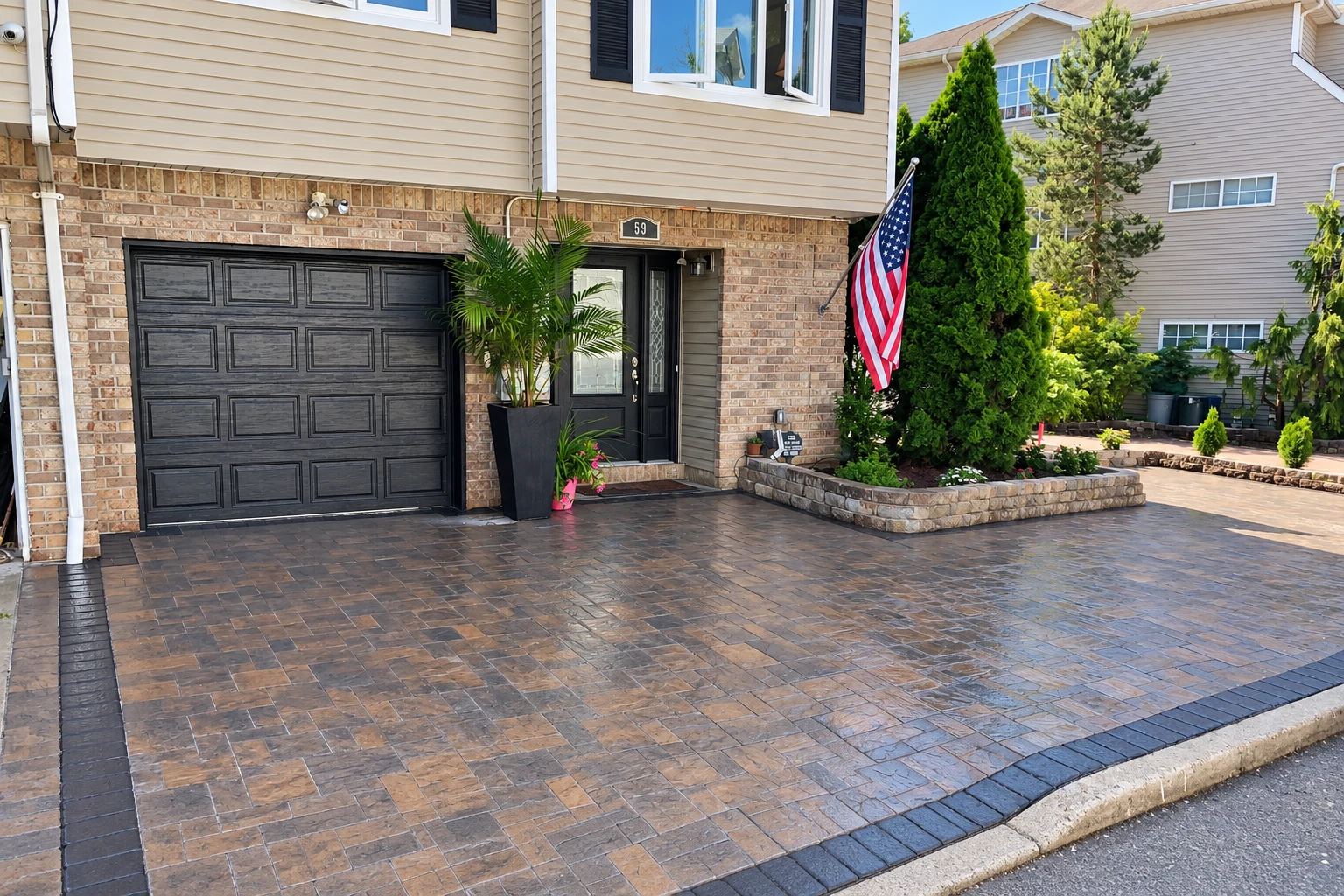
Driveway pavers in Oceanside CA - a driveway that drains and carries your cars
Sinking pavers, puddles by the garage or a tired old slab? We build a base made for cars and plan where the water goes.
- Licensed and insured.
- Free in-person estimates.
- We respond within 1 business day.
What goes into a paver driveway, from the base to the street?
A paver driveway in Oceanside is a surface of interlocking pavers laid over a packed stone base that carries the weight of your cars. The job usually includes tearing out the old driveway, grading so water runs where it should, and setting a firm edge along the sides and at the street.
Most people who call me have a driveway that's sinking in the tire tracks, holding puddles or just worn out, and some already have a bid they couldn't make sense of. The price moves with the size, how much has to be torn out and hauled away, how deep the base needs to go, the pavers you pick and whether any of the work reaches the sidewalk or street. The schedule mostly turns on whether the city has to sign off on work at the curb, and on what we find once the old surface comes up. If your driveway meets the sidewalk, I check what the city needs before we start, and your written estimate spells out the scope, what we'll do and why.
How can you tell your driveway is failing?
Ruts in the tire tracks
If the pavers dip where your wheels roll, the stone base underneath is usually too thin or wasn't packed hard enough for a car. The longer you keep parking on it, the deeper the ruts get and the more base has to come out to fix them.
Puddles that sit after rain
Water that stays on the driveway or runs toward the garage tells you the slope is off or the ground below drains slowly. Left alone, that water soaks into the base and softens it, which is how one low spot turns into several.
Gaps opening at the edges
When the outer rows drift into the lawn or the joints between pavers start to widen, the border that holds them in has usually given way. Fixing an edge early is a small job, but once the whole surface spreads, more of it has to be relaid.
Work that often goes with a driveway
Retaining wall construction
Widening a driveway into a hillside or adding parking on a sloped lot usually means holding soil back, so dirt and runoff stay off the new surface.
Masonry restoration
Old brick columns, steps or a garden border can look shabby beside fresh pavers, and repairing their brick and mortar ties the front of the house together.
How we install driveway pavers
When I come out, I look at how water moves across your lot before we talk about pavers, because a driveway that sheds water toward your garage or the neighbor's yard will cause trouble no matter how good it looks. Oceanside's rules for development projects also want runoff from hard surfaces like driveways to pass through planting or a surface that soaks water in before it reaches the street or a storm drain, so where we slope the driveway matters. Then our crew tears out the old surface, digs down and builds the base heavier than we would for a garden walk, packing the stone in layers because a car puts far more weight on it than feet do. We set a solid edge along the sides, lay the pavers, sweep sand into the joints and run a compactor over the top so they lock together, then we clean up before we go.
A driveway rarely sits by itself. If yours is cut into a slope, retaining wall construction keeps the bank from slumping onto the pavers, and if brick steps or pillars along the drive have worn, masonry restoration can bring them back while we're there.
Standard concrete pavers
These suit most driveways, since they come in plenty of shapes and colors and hold up well under cars on a base built for them. If one ever cracks, we can lift that paver and set a new one without touching the rest.
Permeable pavers
These have wider joints that let rain soak down through the driveway instead of running off, which helps where water has nowhere else to go. They don't suit every lot, so we sort that out with you before you choose them.
Relaying the pavers you have
If your pavers are in good shape but the base under them sank, we can lift them, rebuild the base and put the same pavers back. I'll tell you if that's all your driveway needs.
Get a written estimate for your paver driveway
Send the form and we'll reply within one business day to set up a free visit at your house, with no obligation. Rather talk it through? Call (760) 385-7783.
Call (760) 385-7783Why Oceanside homeowners call Brickline Oceanside Concrete and Masonry for driveway pavers
I write every estimate myself
I come out, look at the driveway with you and explain what I see before you decide anything. Our masons do the work and I check it as it goes, so the person who quoted your job is the one standing behind it.
In business since 2021
I started on the sales side writing up jobs I didn't fully understand, then learned the trade in the field beside experienced masons. That's why I'd rather explain your driveway than hand you a bid you can't read.
Licensed and insured on every job
We're licensed and insured, so the crew and equipment working on your property are covered. Ask anyone you're comparing for the same, because a driveway job brings heavy machines and loads of stone onto your lot.
We check the curb first
Where your driveway meets the sidewalk or street, I check what the city needs before we start. If the job needs a permit, we take care of the application and meet the inspector on site.
The base is the part you'll never see once the pavers go down, so it's the part worth asking about. Tell us about your driveway or call (760) 385-7783, and I'll come out and look at it with you.
What happens after you call us about a paver driveway?
Call or send a few photos
Call (760) 385-7783 or use the form, and tell us what's there now and what you'd like. We get back to you to set a time for me to come out.
I look at it with you
I walk the driveway with you, check how water moves and where it meets the street, and explain what I see. Then I send a written estimate with the scope, what we'll do and why, so you can see what you're paying for before you decide.
Permits first, then the build
Once you say go, we take care of any permit the job needs, and the crew digs out, builds the base and lays the pavers. I check the base before any pavers cover it.
We walk the finished driveway
When the crew's done, I walk the driveway with you and point out what's worth watching, like the sand in the joints. That way you'll know what a healthy paver driveway looks like years from now.
Common questions
How much does a paver driveway cost in Oceanside?
It comes down to the size of the driveway, what has to be torn out and hauled away, how deep the base goes, which pavers you pick and whether any of the work reaches the sidewalk or street. Permeable pavers and drain pipe add to it, and relaying pavers you already have usually costs less than starting over. I'll give you a written estimate once I've seen it, so you know exactly what you're paying for.
Do I need a city permit if my driveway reaches the sidewalk or street in Oceanside?
Yes, the City of Oceanside requires a permit for driveway work in the public right-of-way and for moving a driveway to a new spot. The right-of-way is usually everything past your property line, which can take in the sidewalk, the planting strip, the curb and gutter, and the street. For other permit questions, the city's Engineering Transportation Section answers driveway questions at 760-435-5097, and if your job needs a permit, we handle the application.
Why does a driveway need a deeper base than a patio?
Cars put far more weight on a driveway than people do on a patio, so trade guidance for pavers calls for a deeper stone base under driveways than under walks. The same guidance goes deeper still for difficult ground or heavy traffic. When you compare quotes, check that each one plans a driveway base and not a walkway base.
Are permeable pavers a good choice for my driveway in Oceanside?
They can be, but federal pavement guidance says permeable pavers generally aren't used where groundwater sits within 2 feet of the bottom of the pavement. So how close water sits below your lot decides whether they suit your house. If you're leaning that way, tell me at the estimate and we'll look into it before you commit.
How do I keep a paver driveway from sinking on clay soil?
Trade guidance recommends drain pipes under paver driveways that carry cars on clay or other slow-draining soil, so water can get out of the base instead of softening it. The guidance says that small extra cost pays back many times over in added years of service. If your ground drains slowly, ask about drainage before you ask about colors.
Who can install driveway pavers in Oceanside?
A contractor licensed for paving work, which in California is the C-12 Earthwork and Paving class covering digging, grading and laying paving. When a job needs a city building permit, Oceanside issues it only to licensed contractors of the right class or to owner-builders, homeowners who act as their own general contractor and have owned the home for the last 12 months. An unlicensed worker can only take a job within the state's $1,000 limit for minor work, and only if it needs no permit and they employ no one on it.
Send us photos of your driveway
Send a rough size, a photo of where the driveway meets the sidewalk and a note on any standing water to hi@oceansideconcreteandmasonry.com, and I'll show up already knowing what to check.